

How to Design Insulated Boxes to Be Stackable Without Damaging Insulation?
The Engineering Puzzle of Stackable Temperature Control
Space is money in the logistics industry. Efficient and effective storage and transport of Insulated Boxes requires the ability to stack them securely. This poses a unique engineering issue. Different materials that offer great thermal insulation like foams are usually not load-bearing. They are also compressible which reduces the thickness and destroys the air pockets that serve to insulate. Designing a box that is both a thermal barrier as well as a load-bearing and stackable unit is a hard task that requires a lot of thought when it comes to arrangement, weight distribution, and protective features. A shielding system in which insulation dramatically maintained its overall protection, thermal insulation must not be from stacking weight. Crushing eight, the thermal insulation must be from stacking weight. Crushing a box with bottom thermal insulation from stacking. Crushing a box with bottom thermal insulation from stacking. Crushing weight by thermal insulation from stacking eight, the thermal insulation must not from stacking weight. Crushing bottom thermal.
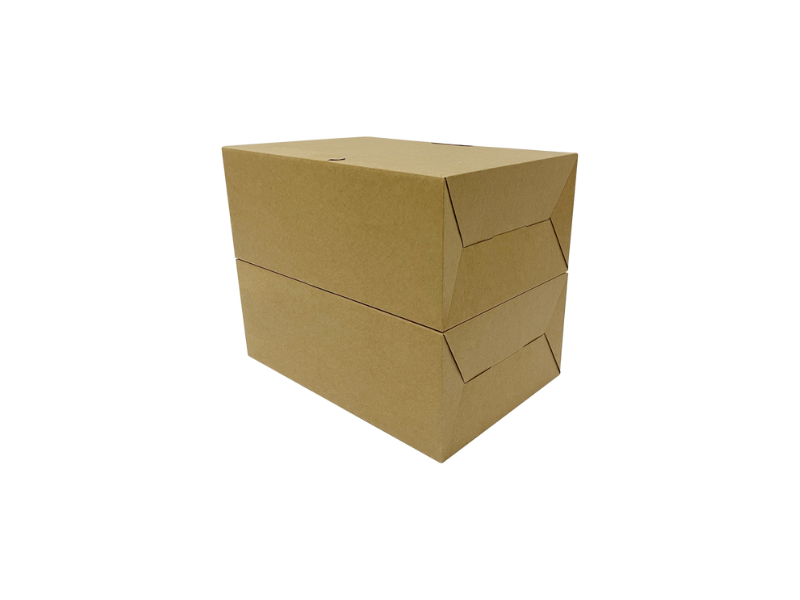
Structural Reinforcement and Load Distribution
The best way to protect insulation from having damage done itself from years of added insulative layers and from taking compressive damage from the stacked insulation and the box above it is to make sure the compression is done entirely from having the added insulative layers completely removed from the box / insulative layer. This is done engineering integrated structural reinforcing. Excellent stacking insulated box design features fitted external skelital support frames. These skelital support frames can be designed using reinforced corner posts made of flexable fiber board or protective crosses of corrugated plastic, paperboard, or insulated external double wall rib structures forming a shell. The design principle is to completely insulate and around ribs of the double external shell, thick reinforced fiber board external rib structures with protective layer insulator walls, there is a empty cavity. The box lid is strong and flat so it can be a placed stacked above on the box along with vertical compression. This design suspends the insulative layer and the compressive protective ribbed structure around it. This layer and around the insulator is a protective cage and experiences no compressive damage, retaining its insulative properties and r value from is thick wall structure.
Shielding the Foam Liners from Getting Squished
Apart from the general framework, the insulating material, on the other hand, also needs to be protected at the micro level. With boxes that have foam liners, choosing the particular foam density is most important here. A foam that is higher in density will deform far less than a lower density foam that is more crumbly when under light to moderate loads. In more sophisticated designs, the insulation is more than just a loose insert. Insulation is also laminated or bonded to the inner and outer liners. This bonding forms a composite panel in which the components work in unison to increase the overall compressive strength. Compartmentalization is another effective technique. Rather than having a single large void, the inner cavity is subdivided into a number of smaller ones by using internal vertical walls. These walls, which are made of the same structural material as the box outer skin, provide extra internal support, which prevents the box walls from bowing in under compressive loads and squashing the foam.
Secondary interlocking stacking stability
It's not a True stackability issue but a sliding stack issue. A box that slides off a stack is a liability. Thus, designing for interlocking stability is a must. A common solution is a lift lock or stacking rim system, which is where the bottom of the box has a recessed well that fits over the ridge of the box below it. This positive locking mechanism aligns the boxes and prevents lateral movement. Interlocking bumps and sockets on the top and bottom surfaces can achieve the same function. This stability prevents the dynamic, shearing, transit forces from moving the boxes, which can grind the insulation down. A stable stack is a safe stack.
Balancing Strength on Site with Practicalities
Lastly, the overall design must appreciate the need for practicality in integration with weight, cost, and simple management. There must be a balance to avoid adding structural elements to the design resulting in substantial weight and cost. Target reinforcement. This is the value of collaboration. They can optimize design by performing or simulating stress testing to determine critical load points. They can recommend specific materials to be used such as stiff and light polymers for corner braces, or a particular grade of double walled corrugated for the body. Ideally, the Insulated Boxes is one that is made to be thick and stiff, can be stacked several units high in a warehouse or truck, and can be managed by the end users. The right design provides the user with the ability to optimize their logistical setup without compromising thermal protection of the product.