

What Size of Paper Box Saves Shipping Costs for Small Batch Orders?
When a business operates in very small batches, it has to be very careful in its decision making. Unlike large retailers, with small batch orders, one does not have the ability to absorb mistakes or negotiate very low prices. Shipping is one of the biggest concerns small batch order retailers have to deal with. Whether the business is creating products or curating them, if shipping costs are high, profitability declines significantly. You will need to adjust your shipping costs based on the carrier, the destination, and the box you choose. A wrong box choice can be very costly, while the right choice encourages savings. This guide is meant to explain the importance of choosing the right size box to save on shipping costs to help small batch order retailers to use packaging strategically.
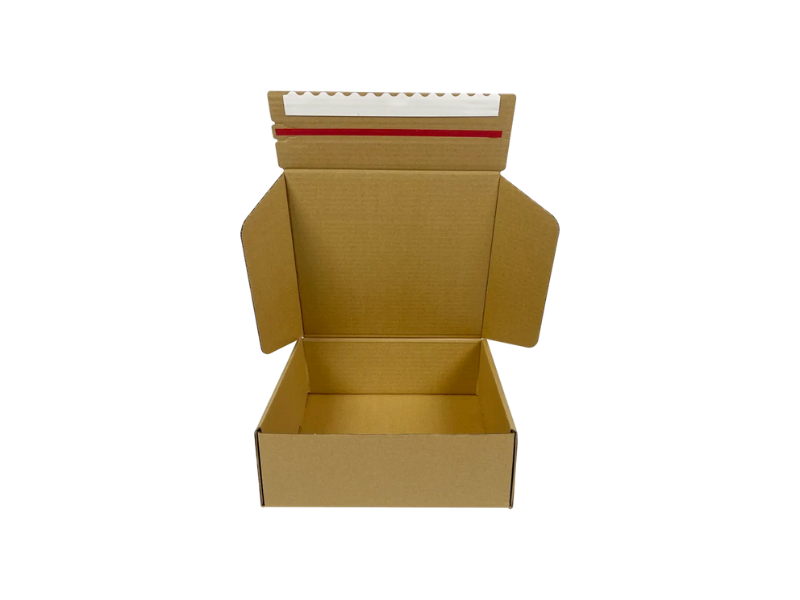
The Small Batch Shipping Dilemma: Why Every Cubic Inch Counts
Every small business that has to ship packages has to deal with the same challenges of optimizing their packing strategy. This is immensely important, as opposed to large consumer and business to business packing order fulfillment centers that ship dozens of highly uniform packing items. As an example, one day, you may ship a delicate ceramic vase. The next? A bundle of T-shirts. This order volume variability leads to an over reliance on a small set of box sizes. This is where over reliance on suboptimal box sizes leads to a cost trap. Carriers charge based on hit rates. With the volume of airplane and vehicle seats, they will bring sent on the journey the plane and vehicle seats create a billable weight. If this billable weight is greater than the actual weight of the box, you've been sent an air bill. Small businesses lose profit to over reliance of the suboptimal box sizes that cause the air bill.
The goal is to make more than 95 of the box fit the entire body of the product like a glove to avoid leaving significant excess box space.
The Goldilocks Principle: Finding the "Just Right" Fit
"Just right" refers to precision when it comes to box dimensions. Grab a measuring tape, a notebook, and a pen. For every product you sell, measure the length, width, and height at the widest points. Then add 1 to 1.5 inches or 2.5 to 4 centimeters, to each measurement to create a target measurement for the box you’re looking for. Note that you aren’t looking for a box that is "close enough" to your target measurement. Rather, find a box that is ideally the exact measurement that you made for each dimension of the box. This is to eliminate empty box space that can cause your shipping cost to increase.
Building Your Small Batch Packaging Toolkit
It would take a large space to fill with a variety of boxes to choose from, and you may not even need a box for every single product. However, it is good to have at least three to five different box sizes that can cover a variety of your products. Rather than a one size fits all approach, take the time to find a box that fits the product seamlessly.The Small Fulfillment Box: Perfect for sample sizes of cosmetics, jewelry, small electronics, etc. Think about small box sizes, such as 30x20x15 cm (12x8x6 in).
The Medium Workhorse Box: This will most likely be the box you use the most. This box is great for clothes, multi-item orders, small home goods, books, etc. A box size of 45x35x25 cm (18x14x in) is super versatile.
The Large/Consolidation Box: Great for bulkier individual pieces, or for consolidating multiple orders made by the same customers close in time. 60x45x35 cm (24x18x14 in) is a good size for these.
For non-fragile items such as clothing, soft goods, or durable crafts, poly mailers are a great solution. They are much lighter than cardboard, which helps reduce the overall billable weight, and they conform to the shape of your product, thereby eliminating most of the dead weight. These mailers can reduce shipping costs by as much as 20-30% compared to shipping in a box, in most cases.
Practical Cost-Saving Strategies Beyond the Box
The right box is the basis for all these smart cost-saving strategies, and will provide the most efficiency.
Implement a Lean Packing Station: Organize your packing space so that all of your sized/ curated boxes, your void fill materials, and your tools are all within the same reach. This saves time, and packing materials are less wasteful, as you don't subconsciously reach for a large box just out of convenience.
Offer to Combine Orders: If a loyal customer places two orders in a short timeframe, reach out to them and offer to combine and ship the orders together. Since shipping one slightly larger box is often cheaper than two separate shipments due to base carrier fees, this also saves the company money.
Look Into Regional Carriers: For domestic shipping, don’t just stick to the national companies. For some regions, there are regional carriers that offer better rates and services, especially for small business accounts.
Compare Shipping Rates Before Purchasing: Before purchasing a label, use a free source to compare shipping rates, or use a multi-carrier platform. By inputting the box dimensions and weight, you can instantly compare multiple services and shipping options to find the best price for that box.
Finding the Right Cost for the Unboxing Experience
For small batch brands, the unboxing experience is a part of the product. Building trust as a brand means having a good unboxing experience, and good unboxing experiences start with good packaging. Right sizing the box is is about engineering protection, and not skimping on protection. High quality cushioning is good, and a box that is perfectly fitted with clean, and well kept, organization is often more expensive, and feels better than just a small box on a lot of packaging. Your unboxing experience is a touchpoint. A box that stays in place without too much space, that gets shipped without damage, and that is a good color/build looks good and builds trust gets good reviews.
With smaller orders, there are some great opportunities to save money by shipping lightly. No one enjoys shipping extra padding. The key to shipping lightly and economically is understanding Dimensional weight pricing. Air is not your friend. When conceptualizing your products, consider using A curated, multi-size packaging toolkit. Having a well listening to every item’s needs will save money. For products of varying sizes, a blend of durable folding paper boxes and flexible Poly mailers optimizes shipping savings. Moreover, adopting lean packing processes, an order consolidation system, and distribution tech to gain price transparency can turn your packaging strategy from a passive expense to an active profit-saving method. To top it off, a well-measured paper box will defend your margins and provide great packaging for a pleasant delivery, improving your reputation and creating value for your brand. The perfect balance of cost savings and great CX.